 Astério Logo PNG
Asterio was a Portuguese sports-car project developed around the end of the 2000s and publicly presented in 2010. Rather than being an established electric-car manufacturer, as it is sometimes described online, Asterio was an ambitious attempt to create a lightweight Portuguese roadster with several proposed powertrain configurations.
The project was associated with InnovXXI and Portuguese entrepreneur Ricardo Baeta. A University of Lisbon study on Portuguese niche automotive design identifies Baeta as the creator of both the Asterio project and brand and of the InnovXXI company. [1]
Asterio Logo Meaning and History
Unlike many obscure automotive logos, Asterio’s name and emblem have a documented explanation. Contemporary material reproducing information from the brand’s original website states that the name came from “Asterios,” interpreted by the project as meaning “Lord of the Stars.” The final “s” was removed to create the Asterio brand name. [2]
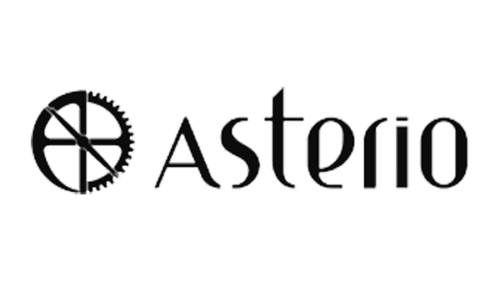
The star-related name was deliberately paired with an astrolabe as the brand symbol. Asterio connected the navigation instrument with the Portuguese Age of Discovery and presented the car as a modern product carrying a specifically Portuguese identity into international markets. [2]
This connection is more specific than generic interpretations such as stars representing ambition or the logo representing technological progress. The project’s own explanation tied both the name and emblem directly to navigation, exploration and Portuguese history.
The Astrolabe Emblem
The Asterio mark uses an abstract circular device based on an astrolabe, accompanied by the Asterio name. The astrolabe was historically used for astronomical measurement and navigation, making it an unusually specific reference for an automotive identity.
Period coverage of the project explicitly identified the astrolabe as Asterio’s symbol and connected it with Portugal’s maritime exploration. In this context, the emblem was intended to make the proposed sports car recognizable as a Portuguese project rather than simply adopting the visual conventions of larger European performance-car manufacturers. [3]
No authoritative source located for this article identifies the designer or design agency responsible for the Asterio logo. Likewise, no reliable source identifies a commercial typeface used for the wordmark.
Asterio Roadster Project
Asterio was formally presented at Portugal’s Estoril circuit on October 21, 2010. Contemporary accounts describe a running prototype chassis and plans for a family of lightweight two-seat roadsters. [2]
The proposed range was broader than an electric-only vehicle line. Development material listed the Asterio Electron as an electric version alongside the diesel-powered Tork 500 and Tork 700 and a lightweight V8 F1 Revival edition. A contemporary report following the project described proposed outputs ranging from an approximately 120-horsepower electric model to a competition-derived V8 version. [4]
AllCarIndex also records Asterio under Portugal and associates the marque with InnovXXI, listing vehicles including the Electron, Tork 500, Tork 700 and V8 F1 Revival Edition. [5]
From Prototype to Proposed Production
Contemporary reporting presented Asterio as a project still moving toward production rather than a mature manufacturer. Plans discussed at the time included establishing facilities near Cascais and producing small numbers of vehicles, with initial road-going cars anticipated for the following years. [3]
Reliable evidence located for this article does not support claims that Asterio launched a commercial electric-vehicle range in 2012, became internationally recognized for driver-assistance technology in 2016 or subsequently developed autonomous vehicles. The surviving documentation instead describes an early-stage Portuguese performance-car project centered on lightweight engineering and several proposed powertrain options.
That distinction matters for the logo’s history. The Asterio emblem belongs to a relatively short-lived attempt to create a modern Portuguese sports-car marque, and its astrolabe symbol was designed to give that project a clear national and historical reference from the beginning.