The LAZ logo belongs to the Lviv Bus Factory (Львівський автобусний завод), the bus and trolleybus plant in Lviv, Ukraine. Riders across the former Soviet Union knew the vehicles simply as ЛАЗ: the acronym compresses Lvivskyi Avtobusnyi Zavod into three Cyrillic letters, and the emblem that reached production vehicles used only one of them, a Cyrillic Л set inside a circle. The plant’s formal name later became Lviv Automobile Factory, which is why some English-language sources introduce the brand that way, but the abbreviation and the badge did not change with it.
 LAZ Logo PNG
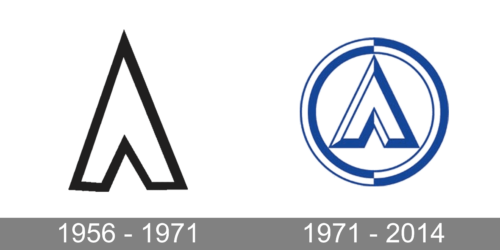
The commonly repeated idea that one logo version ran from 1956 to 1971 and another from 1971 to 2014 is not supported by the available record. The year 1971 is documented instead as the year the plant received the Order of the Red Banner of Labour, according to the Ukrainian Soviet Encyclopedia. What can be described with confidence is narrower: an early badge that did not read as a letter at all, followed by a long-lived circular monogram.
The LAZ emblem
The most substantive published discussion of the emblem comes from the Russian technology outlet TechInsider, which describes the early LAZ-695 badge as visually unusual and rocket-like, shaped under the influence of German Magirus design practice, and notes that a later restyle reduced the mark to a small, modest Л in a circle (TechInsider). That is a tertiary account standing largely alone; no typeface, colour specification, dimensional treatment or designer credit accompanies it.
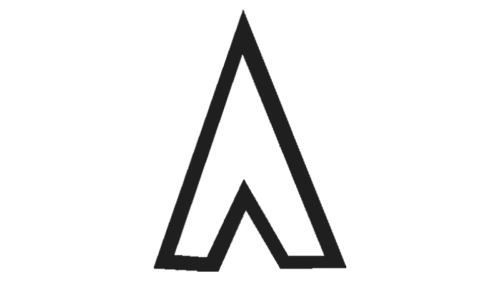
The same account also flags a common misreading. Viewers of the early badge assumed the rocket shape referred to Soviet spaceflight, an interpretation the source cautions against.
Artwork of the early badge that circulates under a 1956 label carries that year in a filename rather than in a documented source, and the surviving image is effectively undated. The nearest firm chronological anchor is the LAZ-695 bus itself, whose prototype appeared in 1956 and whose serial production began the following year, according to the Encyclopedia of Modern Ukraine and Wikipedia’s Lviv Bus Factory entry (Wikipedia places the start of production in 1956).
One detail of the monogram is worth stating plainly: the letter is Cyrillic Л, not a Latin L. Latin L is simply how the initial is transliterated into the acronym LAZ, which is why the badge is often loosely described as an “L” in a circle.
The factory behind the badge
LAZ was founded on 21 May 1945 and grew into the largest industrial enterprise in Lviv, a status recorded in a WUNU monograph on the plant. Its earliest output was not buses: trailers, mobile shops and bakery trailers, excavator buckets, power shovels and truck cranes, including the LAZ-690 crane, according to Encyclopedia of Modern Ukraine and state archive material. The bus era began with the LAZ-695, innovative for the USSR with its rear-mounted engine and frameless load-bearing body. The plant built its 100,000th bus in 1974, peaked at 14,646 buses in 1988, and kept the 695 in series production until 2002, again per the Encyclopedia of Modern Ukraine. Trolleybus production started in 1963.
Ownership shaped the identity’s later life. The plant was privatized in 2001, with a controlling stake of more than 70 percent bought by Sil-Auto, linked to Russian businessman Igor Churkin, as reported by Liga.net. It was renamed Zavod kommunalnoho transportu (Communal Transport Plant) on 7 June 2006, and equipment was moved to a bus plant in Kamianske in 2013, per the WUNU monograph. Production stopped in October 2014 and the plant was declared bankrupt that year; a sanation plan was approved in April 2023 with a new investor, and in October 2024 a Lviv commercial court halted the liquidation.
Because the plant has not produced buses since 2014, the circular Л now survives on vehicles still in service rather than on new ones. That makes the mark a rare case of a badge outliving its own production line: the letter in the circle remains the quickest way to identify a Lviv-built bus.
Disclaimer
This article is part of the educational resources provided by Logo Index, an independent archive covering logos, visual identities and graphic design history. LAZ and associated trademarks and brand assets remain the property of their respective rights holders where applicable.