 Cars With Cross Logos
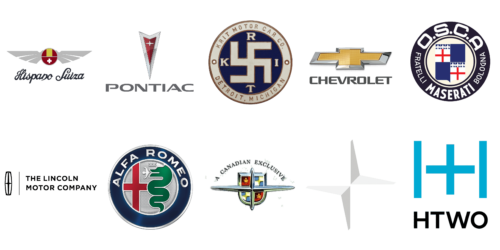
Several automotive logos contain shapes that resemble crosses, but they do not all represent the same symbol. Alfa Romeo uses a genuine heraldic cross from the emblem of Milan. Lincoln and Polestar use four-pointed stars, Subaru depicts the Pleiades constellation, Chevrolet has its distinctive bowtie, and Pontiac used an arrowhead containing a small star-like detail.
Distinguishing these symbols matters because visual similarity does not establish meaning. The strongest explanations come from the automakers’ own histories rather than generic claims that crosses automatically represent reliability, stability or protection.
Car Logos With Crosses and Cross-Like Symbols
Alfa Romeo
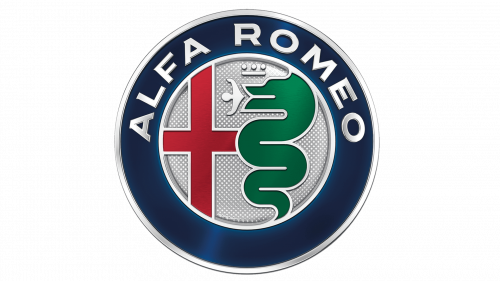
Alfa Romeo provides the clearest genuine cross in this group. Its circular badge combines a red cross on a white field with the Biscione, the serpent associated with Milan’s Visconti family.
Alfa Romeo says illustrator Romano Cattaneo and engineer Giuseppe Merosi developed the original emblem when the company was established in Milan in 1910. Cattaneo was inspired by the Biscione displayed on the Castello Sforzesco, while the other half of the badge incorporated the red cross from the emblem of the City of Milan. [1]
The cross therefore has a specific heraldic and geographic origin. It should not be reduced to a generic automotive symbol of safety or reliability.
Chevrolet
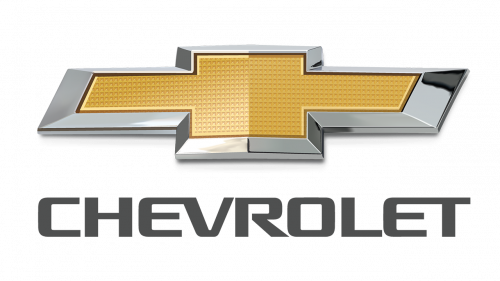
Chevrolet’s famous emblem is normally called the bowtie rather than a cross. Its wide horizontal arms and short central vertical section can produce a cross-like silhouette, but Chevrolet does not identify it as a Christian or heraldic cross.
The precise origin of the bowtie remains unresolved. Chevrolet’s own historical material records several competing accounts. One story says co-founder William Durant encountered a similar pattern on wallpaper in a Paris hotel. His wife later recalled him finding a design in a newspaper advertisement, while his daughter wrote that Durant sketched the emblem while dining. [2]
What is documented is that the bowtie appeared on Chevrolet vehicles by 1914. The frequently repeated theory that it is simply a Swiss cross honoring Louis Chevrolet’s Swiss origins should therefore be presented as one theory rather than established fact.
Lincoln
Lincoln’s emblem can resemble a narrow cross, compass or star, but Lincoln itself identifies the design as a four-point star.
Ford’s archives date the mark to 1955, when it was created for the 1956 Continental Mark II. Designer Robert Thomas reportedly produced the concept overnight after the board unexpectedly requested emblem proposals. His goal was simply to create an elegant symbol for an elegant car. [3]
Lincoln has since offered a more developed interpretation of the emblem, describing its four points as the directions of a compass and the star as a guiding light. [4]
It is therefore more accurate to call this a star or compass-like mark than a cross logo.
Polestar

Polestar’s emblem is another design that can appear cross-like at first glance but was deliberately developed as a star.
Polestar explains that an earlier version of the star appeared on a cyan square when Polestar was closely associated with high-performance Volvo models. When the modern standalone Polestar identity was created, the designers removed the blue square and refined the star so that it could function independently. [5]
The final design was reduced until only two diagonally opposed wings remained. The empty space between them completes the four-pointed star. Polestar describes the resulting symbol in terms of precision and the brand principles of Pure, Progressive and Performance. [5]
Calling the Polestar symbol a cross therefore obscures its documented design origin.
Subaru
Subaru’s logo is based on stars rather than crosses. “Subaru” is the Japanese name for the Pleiades star cluster in the constellation Taurus, also known in Japan as Mutsuraboshi, or the Six Stars. [6]
The corporate history adds a second meaning. Fuji Heavy Industries was established through contributions from five companies with roots in Nakajima Aircraft and later incorporated those businesses. Subaru says the emblem represents five stars joining one larger star, symbolizing that unification. [7]
The six-star emblem first appeared on Subaru vehicles with the Subaru 360 in 1958 and later became Fuji Heavy Industries’ corporate symbol in 2003. [8]
The individual stars can look cross-like at small sizes, but there is no cross symbolism involved.
Pontiac
Pontiac’s later identity centered on a red downward-pointing arrowhead, commonly known as the Pontiac Dart. A small four-point star was positioned near the top of the emblem.
The arrowhead emerged as Pontiac moved away from the Native American chief imagery and hood ornaments used during earlier decades. By the late 1950s, the stylized arrowhead had become one of the division’s principal identifying symbols. Pontiac continued to use variations of the mark until General Motors discontinued the brand in 2010.
The small central detail is better described as a star than a cross. No authoritative source located for this article establishes a separate cross-related meaning for it.
Which of These Car Logos Actually Contains a Cross?
Among the brands shown here, Alfa Romeo is the clearest example of a genuine cross with a documented historical origin. Its red cross is directly taken from Milan’s civic emblem.
The other marks belong to different visual categories:
- Alfa Romeo: a genuine heraldic red cross from the emblem of Milan.
- Chevrolet: the Bowtie, a distinctive geometric emblem whose origin remains disputed.
- Lincoln: a four-point star that can also resemble a compass.
- Polestar: a deliberately constructed four-point star formed from two opposing elements.
- Subaru: six stars representing the Pleiades and the unification behind Fuji Heavy Industries.
- Pontiac: an arrowhead containing a small four-point star.
Why Cross-Like Automotive Logos Are Easy to Misidentify
Simple geometric marks often overlap visually. A four-point star can resemble a cross, a compass can resemble a star, and Chevrolet’s horizontal bowtie can appear cross-shaped when reduced to a silhouette.
That does not mean the symbols share a common historical or religious meaning. Alfa Romeo’s cross comes from Milanese heraldry, Subaru’s stars derive from both astronomy and corporate history, Polestar intentionally constructed a star, and Lincoln’s emblem began as a quickly developed symbol for the Continental Mark II.
For automotive logo history, documented origin is therefore more reliable than assigning meaning based only on visual resemblance.