 Ruinart Logo PNG
Ruinart is a Champagne house founded in Reims by Nicolas Ruinart on 1 September 1729. The house describes itself as “LA PLUS ANCIENNE MAISON DE CHAMPAGNE,” or the oldest Champagne house, and identifies Chardonnay as a signature grape (LVMH).
Meaning and history
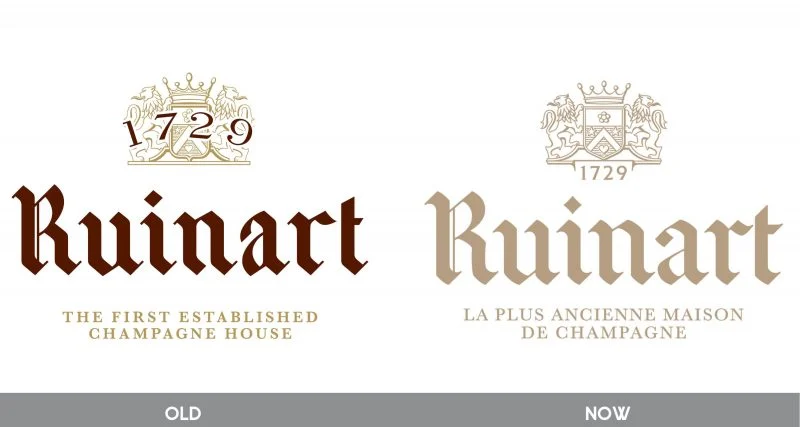
The identity brings together the Ruinart name, a coat of arms and the founding date. The earlier design places “1729” across the arms, while the later arrangement sets the date below them. Its labels show a visual comparison, not dates for when either design began.
Old Logo
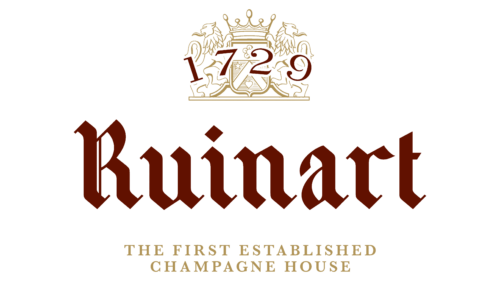
Here, the date sits over the detailed arms, forming a compact crest above the large gothic-capital wordmark. The phrase “THE FIRST ESTABLISHED CHAMPAGNE HOUSE” appears beneath the name. The lettering and date overlap the heraldic detail, making the upper part of the mark visually dense.
New Logo
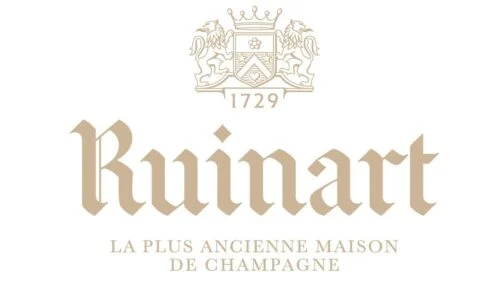
Agence Pierre Katz describes reworking the gothic lettering into a more Latinised form, lightening the arms and moving the founding date from above the arms to a position beneath them. The studio says the redesign sought to restore the name’s prominence and express the spirit of Blanc de Blancs; it also describes the lighter arms as conveying the opulence and refinement of Champagne (Agence Pierre Katz).
In 2024, Ruinart presented a new visual identity at ARCOlisboa alongside its Carte Blanche project, “Conversation(s) with Nature” (Notícias ao Minuto). That presentation connects the identity with a broader nature-focused creative direction; the documented redesign details above describe the wordmark, arms and date arrangement.
Lettering and composition
The wordmark retains a gothic-capital character in both designs, while the redesign describes its lettering as Latinised. The main compositional change is the date’s position: it crosses the arms in the earlier arrangement and appears below them in the later one. Together, the name and arms keep the house’s identity recognizable while giving the lettering more visual prominence.
Ruinart commissioned Art Nouveau illustrator Alfons Mucha for a poster in 1896, an earlier chapter in the house’s visual history rather than a stage in this logo sequence (LVMH).
Disclaimer
This article is part of the educational resources provided by Logo Index, an independent archive covering logos, visual identities and graphic design history. Ruinart and associated trademarks and brand assets remain the property of their respective rights holders where applicable.