 Maker’s Mark Logo PNG
Maker’s Mark logo and visual identity
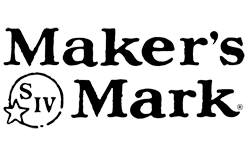
The Maker’s Mark identity brings together a flowing script wordmark, a circular seal marked “S IV,” and the red wax coating on the bottle neck. The script and seal form the graphic mark; the wax is a separate part of the brand’s packaging identity. The first Maker’s Mark bottles were released in 1958 with red wax, according to The Whiskey Wash.
The script, seal and label
Margie Samuels designed the brand name and label, including its lettering, bottle shape and wax treatment, according to a University of Nebraska–Lincoln dissertation and The Whiskey Wash. The wordmark is a prominent, joined script. On the physical label, dark ink sits on off-white paper with hand-torn edges; The Whiskey Wash also describes the use of a hand-operated 1935 Chandler & Price press.
The circular seal places “S IV” beside a star, with small breaks in its outline. VinePair explains the S as Samuels and the star as a reference to Star Hill Farm. The IV has been explained as the family’s fourth generation, though accounts differ on that generational count, so the numeral is best read as part of the established seal rather than as an undisputed family-history fact. VinePair also connects the circle’s breaks with periods when alcohol sales were illegal.
The red wax and trade dress
The red wax is distinct from the wordmark and seal. The U.S. registration for the wax-like coating, issued in 1985, describes material covering the cap and trickling down the neck in a freeform, irregular pattern; it does not specify a colour, as Pattishall McAuliffe explains. In 2012, the Sixth Circuit upheld the wax trade dress in a case involving José Cuervo, according to IP Spotlight.
1953 – Today

Maker’s Mark was founded in 1953 by Bill Samuels Sr. and Margie Samuels; the first bottles followed in 1958. The script wordmark and S IV seal remain part of the brand identity. A 2026 packaging update for Cask Strength added an age statement while retaining those elements, as Suntory Global Spirits describes. That expression-specific change did not replace the core mark.
Disclaimer
This article is part of the educational resources provided by Logo Index, an independent archive covering logos, visual identities and graphic design history. Maker’s Mark and associated trademarks and brand assets remain the property of their respective rights holders where applicable.