 Trabant Logo PNG
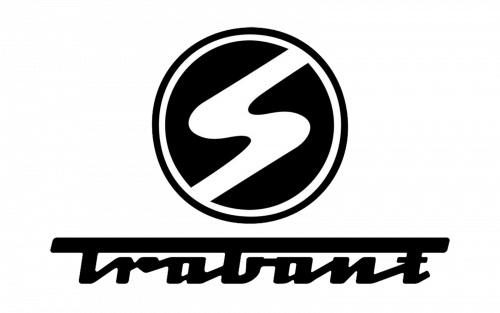
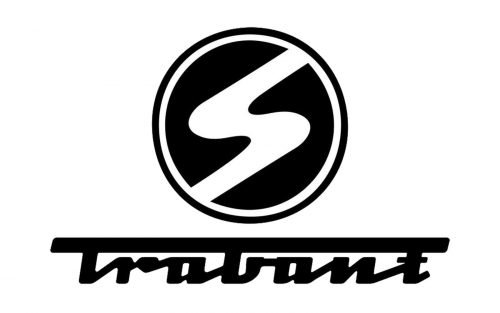
Trabant was the best-known passenger-car marque produced by VEB Sachsenring Automobilwerke Zwickau in East Germany. Its identity combined a circular Sachsenring emblem with a distinctive handwritten-style Trabant wordmark, creating one of the most recognizable automotive marks associated with the former German Democratic Republic.
Trabant Logo Meaning and History
Production of the Trabant began in Zwickau in 1957. The marque was manufactured by VEB Sachsenring Automobilwerke Zwickau, and the Sachsenring name became an important part of its visual identity. Archival records from the Saxon State Archives document the company and the development of models including the P50, P60 and later Trabant 601. [1]
The Trabant 601, introduced in the 1960s, became by far the best-known version of the car. The City of Zwickau notes that roughly three million Trabants were produced, making the vehicle an enduring symbol of the city’s automotive history. [2]
The Sachsenring Emblem
The circular badge associated with Trabant contains a stylized S, referring to Sachsenring, the state-owned manufacturer responsible for the car. The symbol was commonly used separately from the Trabant script and appeared as a physical badge on vehicles.
The design is highly geometric: a rounded outer frame contains the compact S-shaped form, allowing the emblem to remain recognizable at small sizes and when reproduced in metal. There is no strong surviving primary documentation assigning broader symbolic meanings such as unity, progress or industrial efficiency to the circle or its colors, so those interpretations are better avoided.
The Trabant Wordmark
Alongside the Sachsenring badge, Trabant used a distinctive script-style wordmark. Its flowing lettering contrasts with the more mechanical geometry of the emblem and became closely associated with the car itself.
One of its most recognizable features is the extended horizontal stroke of the initial T, which stretches across much of the name. No authoritative source located for this article identifies a commercial typeface, suggesting the lettering should be treated as a custom wordmark rather than attributed to a specific font.
Trabant and the 601
The visual identity became especially familiar through the Trabant 601, which entered production in 1964 and remained the marque’s dominant model for decades. Original technical documents and promotional material from VEB Sachsenring preserved by the Saxon State Archives show how central the 601 was to the manufacturer’s later history. [3]
Trabant production ultimately ended in 1991. The Trabant Museum in Prague identifies the later 1.1 model, fitted with a Volkswagen-derived four-stroke engine, as the final production version before the marque was discontinued. [4]
Why the Trabant Logo Is Still Recognizable
The Trabant identity remained visually simple throughout the marque’s life: a compact Sachsenring emblem combined with an expressive script name. That contrast helped make the badge easy to recognize even without elaborate graphics or frequent redesigns.
Today the logo is strongly associated with the Trabant’s broader cultural legacy. Although production ended more than three decades ago, the car remains closely connected with East German automotive history, particularly in Zwickau, where a monument to the Trabant now stands near the August Horch Museum. [2]