Zhidou Meaning and History
 Zhidou’s development began before the formal creation of the later joint venture. The company traces its electric-vehicle activities to 2006, when development of small four-wheel electric vehicles began. [2]During the following years, Zhidou expanded its engineering and manufacturing operations. The brand’s own historical material records a Shanghai research center in 2010, a manufacturing base in Yinan in 2011, European E-MARK and CE certification in 2012, and use of Zhidou vehicles in Italy’s Share’N GO car-sharing program in 2014. [3]In January 2015, Geely Automobile agreed to create a 50:50 joint venture with independent partners under the name Ninghai Zhidou Electric Vehicles Company Limited. Geely’s financial reporting describes the venture as focused on electric-vehicle production and related components and services. [4]
The Zhidou Brand
Zhidou has consistently focused on very small electric cars designed for short-distance urban mobility.Geely described the Zhidou D2 in 2015 as a mini electric vehicle developed specifically for short urban journeys, with compact dimensions intended to make city driving and parking easier. [5]This micro-EV positioning remains central to the brand today. Geely’s 2024 annual report states that Zhidou continues to focus on the new-energy micro-mobility sector and aims to provide small urban mobility solutions. [6]2015–2017: Early Zhidou Logo
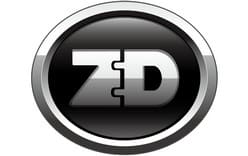
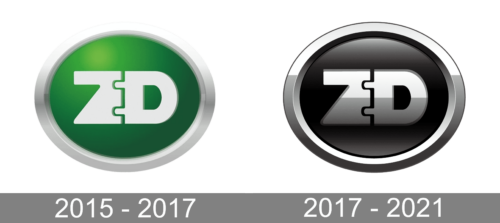
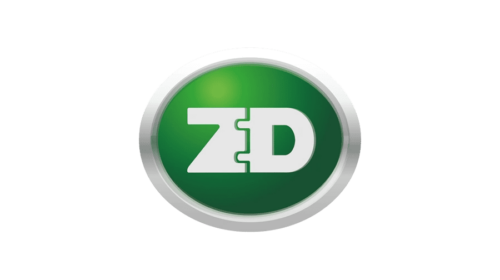 The early Zhidou identity centered on the letters ZD inside a rounded badge.The most distinctive feature is the treatment of the D, whose inner form resembles an electrical plug or power connector. This creates a direct visual association with electric mobility while preserving the initials as the main identifying device.The badge was commonly shown in green, silver and white treatments. Green clearly reinforces the visual connection with electric mobility, but there does not appear to be strong primary documentation assigning a formal symbolic meaning to the color itself.It is therefore safer to describe the plug-like D and color treatment visually rather than claim that green officially represents sustainability or environmental responsibility.
2017–2020s: Monochrome ZD Emblem
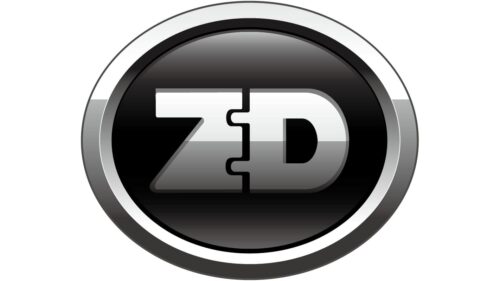 A later version simplified the same ZD concept into a more restrained monochrome badge.The basic structure remained recognizable: the Z and D continued to form the main mark, and the D retained its plug-like construction. The surrounding frame became darker and cleaner, while the earlier green treatment was reduced or removed in many applications.This was an evolutionary update rather than a completely new identity. The central idea, combining the ZD initials with an electric-vehicle reference, stayed intact.
What Does the Zhidou Logo Mean?
The strongest identifiable idea in the Zhidou logo is the integration of the company initials with an electric-power motif.The D appears to incorporate a plug-like form, visually linking the ZD initials with the brand’s electric-vehicle focus.No reliable primary source identified for this article gives a detailed official explanation of every part of the emblem, so claims about speed, environmentalism, innovation or technological leadership should not be presented as documented logo meanings.Zhidou Wordmark and Typography
Zhidou branding has used both the ZD emblem and the English ZHIDOU name in corporate and vehicle applications.The lettering is generally geometric and sans serif, fitting the compact and technology-oriented character of the brand.No authoritative source identified for this article names a specific commercial typeface or logo designer, so the lettering should be described visually rather than matched to a font based only on appearance.Zhidou Logo Colors
Earlier versions used combinations of green, metallic silver and white, while later applications often moved toward black, white and metallic finishes.These shifts simplified the identity and made the emblem easier to reproduce across vehicle badges and digital applications.There is no strong published evidence that Zhidou formally assigns psychological meanings to these colors, so generic statements such as “green means eco-friendly” or “black represents sophistication” should be avoided as factual claims.Zhidou’s Growth and Decline
Zhidou grew rapidly during the middle of the 2010s as China’s micro-EV market expanded.Chinese business reporting records sales of approximately 25,300 vehicles in 2015, 24,000 in 2016 and 43,000 in 2017. But changes in subsidy rules, slower technological development and strategic problems contributed to a sharp decline. By 2019, the company had entered financial restructuring. [7]This period explains why some older articles describe Zhidou as if it had permanently disappeared.2024 Brand Revival
Zhidou returned to the market in 2024 after completing a strategic capital restructuring.The restructuring was supported by Geely Auto Group, Aima founder Zhang Jian, Zhidou founder Bao Wenguang, GSR Ventures, China Three Gorges Capital and other investors. [1]The company described 2024 as a year of brand renewal, with a younger visual direction and a renewed focus on micro-electric vehicles. [2]Zhidou Caihong and the Renewed Brand
The Zhidou Caihong, also translated as Zhidou Rainbow, became the first production model introduced after the brand renewal.The vehicle launched in April 2024 as a small battery-electric city car. Geely’s 2024 annual report specifically identifies Caihong as the first new-energy micro-EV released after the Zhidou brand renewal. [6]The renewed brand continues the same central positioning that defined Zhidou before its decline: compact electric mobility for short-distance and urban use.Is Zhidou Still Active?
Yes. Zhidou is active again following its restructuring and 2024 relaunch.The current Chinese website lists the ZHIDO Caihong and Caihong Pro, while Geely’s latest corporate reporting continues to describe Zhidou as an active manufacturing brand focused on the micro-electric-vehicle segment. [8] [6]Why the Zhidou Logo Is Interesting
Zhidou’s logo is effective because its central idea directly connects the brand name with its product category.- The ZD initials create immediate brand recognition.
- The plug-like D visually reinforces the electric-vehicle focus.
- The badge works as a compact physical vehicle emblem.
- Later versions simplified the execution without abandoning the original idea.
FAQ
What is Zhidou?
Zhidou is a Chinese electric-vehicle brand focused on small urban EVs and micro-mobility. Its history dates to electric-vehicle development that began in the mid-2000s.
When was Zhidou founded?
Zhidou traces its electric-vehicle development to 2006, while the formal Geely-linked Zhidou joint venture was established in 2015. [4]
What does the Zhidou logo mean?
The logo uses the ZD initials, with the D shaped in a way that resembles an electrical plug, directly connecting the badge with the brand’s electric-vehicle identity.
Was Zhidou owned by Geely?
Geely participated in Zhidou through a joint venture established in 2015. The brand’s ownership and investment structure later changed, and Zhidou underwent a new strategic restructuring before its 2024 relaunch. [4]
What happened to Zhidou?
Zhidou suffered a sharp sales decline and entered restructuring around 2019. The company later completed a strategic recapitalization and relaunched the brand in 2024. [1]
Is Zhidou still making cars?
Yes. Zhidou returned to the market in 2024 with the Caihong micro-EV and currently markets the Caihong and Caihong Pro. [8]
Disclaimer
This article is part of the educational resources provided by Logo Index, an independent archive covering logos, visual identities and graphic design history. Zhidou and associated trademarks and brand assets remain the property of their respective rights holders.