 Alvis Logo PNG
Alvis was a British engineering and automotive company founded in Coventry in 1919. It became known for technically advanced luxury cars, competition models and later military vehicles, while its visual identity became closely associated with a distinctive red triangular badge.
The triangle has endured as one of the most recognizable elements of the Alvis name. Its long association with the marque is more important than speculative claims about generic triangle psychology.
Alvis Logo Meaning and History
Alvis began in 1919 under engineer Thomas George John and developed into one of Britain’s respected specialist vehicle manufacturers. Its cars were produced in Coventry and included models such as the Speed 20, Grey Lady and later three-litre touring cars.
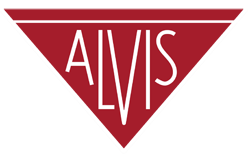
Across surviving vehicle badges, advertising and modern heritage material, the red triangle became closely identified with Alvis. The mark is simple: a triangular red field carrying the Alvis name, often combined with metallic edging or additional badge elements depending on the vehicle and period.
No reliable primary source located for this article assigns an official symbolic meaning such as strength, stability or precision to the triangle. It is therefore better treated as the marque’s distinctive visual identifier rather than as a coded psychological symbol.
The Red Triangle
The red triangle became so strongly associated with Alvis that the specialist company preserving and supporting the marque today operates under the name Red Triangle.
This makes the symbol especially interesting from a branding perspective. The geometric form outlasted original passenger-car production and became shorthand for the marque itself.
The significance is historical rather than psychological: repeated use over decades gave the triangle recognition and meaning.
Alvis Cars and Coventry
Alvis built cars in Coventry and developed a reputation for engineering innovation and relatively low-volume, upmarket production.
Among its better-known models was the Speed 20, introduced during the 1930s. Later post-war cars included the TC21, TD21 and TE21.
The British Motor Museum preserves a 1965 Alvis TE21 in its collection, reflecting the marque’s continued importance in British specialist-car history. :contentReference[oaicite:2]{index=2}
Alvis and Military Vehicles
Alvis also became important in military engineering. The company produced armored vehicles including the Saladin, Saracen and Stalwart, giving the Alvis name a life well beyond passenger cars.
This broader engineering activity is important because Alvis did not simply disappear when car production stopped. Automotive and defense operations followed different corporate paths over subsequent decades.
Rover Acquires Alvis
Rover acquired Alvis during the 1960s. The British Motor Museum states that Rover had bought the company by 1965 and subsequently developed prototype replacements for the aging Alvis three-litre range. :contentReference[oaicite:3]{index=3}
One such project was the Alvis GTS, based on Rover engineering and styled by David Bache. The project did not reach production.
The Museum also preserves the P6BS prototype, conceived as a potential revival for the Alvis name before rationalization following the British Leyland merger ended the project. :contentReference[oaicite:4]{index=4}
When Did Alvis Stop Making Cars?
Passenger-car production effectively ended in 1967, during the period of Rover and Leyland consolidation.
This does not mean the Alvis name disappeared completely. Engineering and defense activities continued, while the automotive heritage remained valuable to specialists and owners.
The Alvis Name After 1967
The Alvis marque continued through military and engineering businesses under changing ownership structures, while interest in the historic cars remained active through clubs, restoration specialists and collectors.
The surviving red triangle identity helped provide continuity between the original company and later businesses connected with the marque.
Alvis Typography
The Alvis name has appeared in different badge and wordmark treatments over its long history. Many applications use simple uppercase or title-case lettering integrated directly into the red triangle.
No reliable source located for this article identifies a specific commercial typeface as the official historic Alvis font. It is therefore more accurate to describe the lettering visually rather than match it to a modern font family.
Alvis Logo Colors
The best-known Alvis badge combines red with white or metallic detailing.
There is no strong evidence that Alvis officially defined red as passion, silver as precision or white as purity. Those are generic branding interpretations rather than documented company meanings.
The safest explanation is simply that the red triangle became a distinctive and enduring component of the marque’s visual identity.
Why the Alvis Logo Is Memorable
The Alvis badge demonstrates how a simple shape can build recognition through long-term use.
Its strength comes from:
- Simple geometry: the triangle is easy to recognize at different sizes.
- Consistent color: red gives the mark a strong visual signature.
- Integration with the name: the Alvis lettering makes the symbol immediately identifiable.
- Historical continuity: decades of use gave the badge significance beyond its basic shape.
Its branding value therefore comes from accumulated recognition rather than from a universal meaning assigned to triangles.