Mitsuoka Motor Co., Ltd. is a Japanese coachbuilder that takes mass-produced cars from Nissan, Mazda, Toyota and Honda and gives them hand-built, retro-styled bodies in Toyama. Its badge is a quieter part of that identity: a compact emblem whose documented meaning reaches back considerably further than the cars it sits on.
 Mitsuoka Logo PNG
The emblem and the pictograph behind it
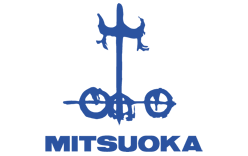
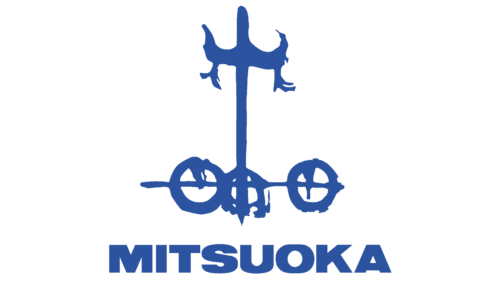
Mitsuoka attributes its emblem to the ancient pictograph (象形文字) of the character 車, meaning car or vehicle, a form said to date from around 800 BC. The stated reason for adopting it is a wish never to forget the origin, as reported by Japanese car media quoting the company. That attribution is the clearest documented explanation of what the mark represents.
Descriptions of how the badge is actually constructed are sparse. One Japanese secondary source characterises it as a trident or three-pronged-spear-like form combined with three circles of different sizes, an arrangement it calls unusual among Japanese manufacturers. Typeface, colour specification and design authorship for the corporate emblem are not documented in available sources, so those details are best left unstated.
An emblem without a documented redesign
The year the current corporate emblem was introduced is not established by the sources reviewed here, and no earlier Mitsuoka badge has been reliably identified as a superseded version. The company’s official corporate history records founding dates, incorporation and model milestones rather than logo events, which is why the badge tends to be described by what it references rather than by when it changed.
The 2018 50th-anniversary logo
By contrast, Mitsuoka’s commemorative identity work is unusually well documented. In December 2017 the company announced a 50th-anniversary logo and slogan chosen from submissions by its own employees, according to the official release. The design expresses “50” through a pentagon and decagon combination. A Möbius strip running around the outer perimeter stands for the business continuing indefinitely, the 14 lines on that strip represent the 14 authorised imported-car dealer brands, and three colours represent the three mutually supporting businesses: Mitsuoka itself, its BUBU dealership arm and its import dealership operation.
The slogan released with it, 「夢、挑戦、次代へ。」, reads roughly as “Dreams, Challenges, Toward the Next Generation.” This is a commemorative device tied to an anniversary year rather than a replacement of the corporate emblem.
Mitsuoka marked the milestone with the Rock Star, announced in November 2018 and built to a 200-unit limit at line-off on 23 July 2019. The company reached its 55th anniversary in February 2023 and released the M55 CONCEPT on 16 November 2023, continuing the pattern of anniversary-year special marks.
Co-branded and campaign marks
Not every special Mitsuoka mark signals a change in corporate identity. An official 2018 release documents a Devilman Orochi collaboration logo, linking the company’s 50th anniversary to the 50th anniversary of Go Nagai’s manga. The name refers to the Orochi sports car, produced from 2006 until 2014, with the run ending in September 2014 with a Final Edition, as reported by trade press. Marks of this kind belong to campaigns and one-off models rather than to the corporate identity.
The company the badge belongs to
Understanding the emblem’s context means separating the founding of the business from the incorporation of the company. Mitsuoka began trading in February 1968 as Mitsuoka Jidousya Kogyo, an individual proprietorship founded by Susumu Mitsuoka, who started out doing sheet-metal and paint repair in a rented horse stable in the Toyama City area. A retail arm, Car Shop Mitsuoka Jidousya, followed in March 1970, and the corporation, Mitsuoka Motor Co., Ltd., was established in November 1979, per the company’s own account. The familiar English style “Mitsuoka Motors” is a legacy rendering of the earlier trading name rather than the registered company name.
Full-scale modified-car production began in July 1987 with the BUBU Classic SSK, and the company has since built its reputation on retro-styled bodies over modern mechanicals, sold alongside its BUBU used and imported-car dealership business. Coachbuilding, rather than a frequently redrawn badge, is where most of Mitsuoka’s visual identity actually lives.
How the identity travels abroad
Outside Japan, the badge accompanies a small hand-built range. Mitsuoka’s first European dealership opened in June 2015 with T W White & Sons in the United Kingdom, where the Himiko-based model was sold as the Mitsuoka Roadster, with a launch event on 13 June 2015 and an annual sales target of 24 cars, according to the company’s UK launch release. The Himiko had gone on sale in Japan in December 2008. The official UK site notes that the brand had previously sold in Japan, South East Asia and the Middle East.
FAQ
What does the Mitsuoka logo mean?
Mitsuoka attributes its emblem to the ancient pictograph of the character 車, or vehicle, a form said to date from around 800 BC. The company’s stated reason is a wish never to forget the origin of the business.
When was the Mitsuoka logo introduced?
Available sources do not establish the year the current corporate emblem was introduced, nor do they identify an earlier Mitsuoka badge as a superseded design. Mitsuoka’s best-documented identity mark is instead its 50th-anniversary logo, announced in December 2017 and built around a pentagon, a decagon and a Möbius strip.
Disclaimer
This article is part of the educational resources provided by Logo Index, an independent archive covering logos, visual identities and graphic design history. Mitsuoka and associated trademarks and brand assets remain the property of their respective rights holders where applicable.