Lincoln is the luxury car marque of Ford Motor Company, and its current badge is one of the more stable identity marks in the American auto industry: a four-pointed star, usually set inside a slim rectangular frame. The star has outlasted every earlier Lincoln emblem, from an enamel cloisonné radiator badge to a leaping greyhound hood ornament and a heraldic crest. The full visual identity is catalogued in the Lincoln brand profile.
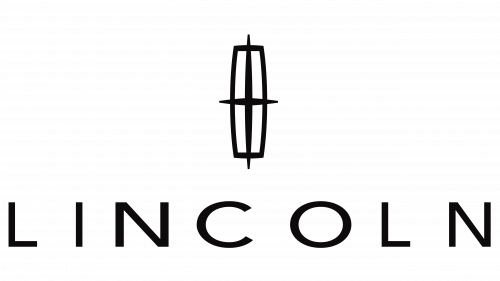 Lincoln Logo PNG
The badge is inseparable from the company’s founding. The Lincoln Motor Company was incorporated in August 1917 in Detroit by Henry M. Leland and his son Wilfred, who had left Cadillac to build Liberty V12 aircraft engines for the U.S. government during the First World War, as the National Park Service records. Leland named the company after Abraham Lincoln, the first U.S. president he ever voted for, in 1864, according to Lincoln’s own historical notes. The first Lincoln automobile, the Model L, was completed on September 14, 1920.
From the Leland badge to the four-pointed star
The earliest documented Lincoln emblem is not a star at all. It is an enamel cloisonné radiator badge inscribed “LELAND-BUILT / LINCOLN,” made by the D. L. Auld Company of Columbus, Ohio, and held in the collection of The Henry Ford with a 1922 date. Lincoln’s own summaries describe the company’s early identity in terms of simple but stylish lettering rather than an ornate device.
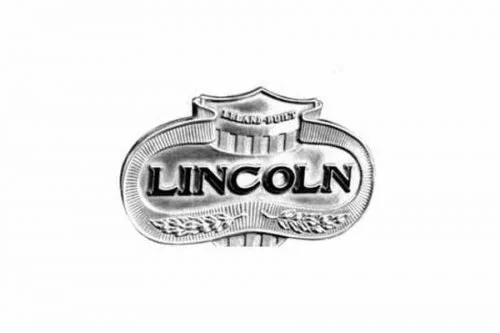
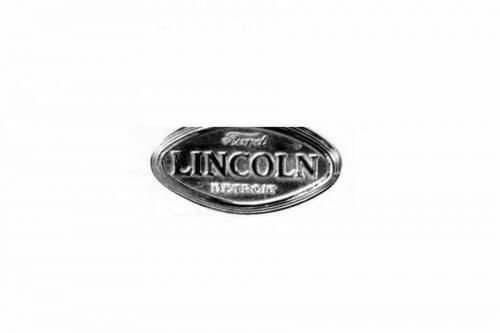
That period ended abruptly. Lincoln ran into difficulty after the war, a receiver was appointed in November 1921, and Ford bought the company’s assets for $8 million in February 1922, with the Lelands removed from management by June of that year. Ford’s centennial release dates the purchase to February 4, 1922. Edsel Ford then led Lincoln until his death in 1943. Under Ford ownership the badge began carrying the Ford name, and the “Leland Built” wording was dropped.
Through the late 1920s and 1930s the marque’s most recognizable symbol sat not on the badge but on the radiator cap: a leaping greyhound ornament, commissioned from the silversmiths Gorham in 1925 and used on Lincoln cars from roughly 1927 to 1941, according to MotorCities. Ford’s own history links the greyhound to the Model L era and to ideas of speed, stamina and grace.
A crest or coat-of-arms style emblem followed. The Henry Ford dates Lincoln’s crest emblem to the 1942 model year. The exact sequence of heraldic motifs in that period is not consistently documented, and the surviving emblems from the late 1930s and early 1940s are often described in conflicting terms.
The four-pointed star, the mark Lincoln still uses, was drawn in 1955. Ford stylist Robert Thomas sketched it overnight, with the design team led by John Reinhart and Gordon Buehrig, and the sketch was approved for the 1956 Continental Mark II, as Lincoln’s heritage page and the Ford Motor Company Archives record. The Continental Division adopted the four-pointed star as its logo in 1956, and when that division was folded back into Lincoln, the star became Lincoln’s own mark across the line for 1958, a chronology set out by The Henry Ford.
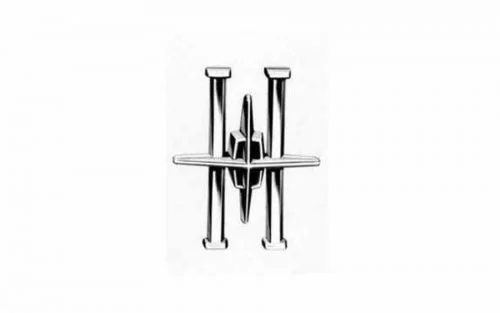
The star has been adjusted many times rather than replaced. Lincoln has described roughly 20 modifications to the logo since 1922. One specialist history places the vertical, crosshair-style orientation of the star at the 1980 model year, though that specific date is not corroborated by multiple sources. The star shape itself, four tapered points set on a vertical and horizontal axis, has stayed constant through those refinements.
The corporate identity around the star changed more visibly. On December 3, 2012, Ford announced a repositioning that renamed the brand “The Lincoln Motor Company” and paired Abraham Lincoln imagery with the redesigned MKZ, as reported by the Boston Globe. The star badge itself was tidied around the same period, and some sources date the current, more simplified rendering to 2018 instead. The precise year of that badge revision is not settled.
What the star is meant to represent
Lincoln’s own account of the star’s meaning is deliberately spare. Ford Archives describes Thomas’s brief as creating a simple, elegant design for an elegant car, with the star evoking a sense of luxury. In a 2022 release, Lincoln head of exterior design Earl Lucas said the four points correspond to the four points of a compass, making the mark a guiding star, while heritage manager Ted Ryan recounted the 1955 overnight sketch. That statement is the brand’s own interpretation rather than a documented symbolic origin, and no authoritative source ties the star to Abraham Lincoln’s presidency or to a specific colour scheme.
Because the four-pointed star has been the constant in Lincoln’s visual identity for nearly seven decades, the marque’s badge story is unusual among luxury brands: a single geometric mark, quietly reworked, rather than a succession of unrelated emblems. The greyhound, the crest and the Leland-era enamel plate are now historical footnotes, while the star remains what most drivers picture when they picture a Lincoln.
Disclaimer
This article is part of the educational resources provided by Logo Index, an independent archive covering logos, visual identities and graphic design history. Lincoln and associated trademarks and brand assets remain the property of their respective rights holders where applicable.