Alcobia e Ribeiro Meaning and History
 The A.R. sports car was created in Castelo Branco, Portugal, in 1955 by António Alcobia and Joaquim Nunes Ribeiro. Contemporary and retrospective sources describe Alcobia as a Peugeot dealer and Ribeiro as involved in transport, with the two men collaborating on a purpose-built lightweight sports car. [1]The initials A.R. came directly from the surnames Alcobia and Ribeiro.The project did not develop into a conventional large-scale car manufacturer. Instead, it appears to have remained a highly limited Portuguese sports-car effort, with historical sources focusing almost entirely on the single A.R. competition car rather than on a broader model range. [3]
The A.R. Sports Car
The best-known Alcobia e Ribeiro vehicle was a lightweight open sports car built around a tubular chassis and aluminum bodywork.The car used a modified Peugeot 203 four-cylinder engine. ANSA reports that the engine produced more than 60 hp and that the completed vehicle weighed only a little over 600 kg. [1]The combination of low weight, a tubular chassis and the tuned Peugeot engine gave the car competitive performance for its time.Historical accounts describe the A.R. as being capable of approximately 200 km/h, an unusually high figure for such a small Portuguese-built sports car in the mid-1950s. [1]Competition History
The A.R. became notable because it was not merely a workshop experiment. It was entered in Portuguese motorsport and competed against established international marques.Historical records from Castelo Branco describe the car competing in the VII Volta a Portugal, where it achieved a strong result against cars from manufacturers including Mercedes, Ferrari and Porsche. [2]ANSA reports that the A.R. finished second in the 1955 Volta a Portugal, positioned between two Mercedes-Benz 300 SLs in the classification. [1]That result is the main reason the car remains historically significant today. It demonstrated that a small, locally built Portuguese sports car could compete seriously with much better-funded European manufacturers.Was Alcobia e Ribeiro a Mass-Production Manufacturer?
No evidence located for this article supports the idea that Alcobia e Ribeiro became a large-scale automotive manufacturer.Sources about Portuguese automotive history instead describe A.R. as a very short-lived project. One overview of Portuguese marques characterizes the car as essentially a one-off, noting that no industrial continuation followed. [3]Academic material on Portuguese design history similarly describes the A.R. Alcobia e Ribeiro as one of several extremely short-lived Portuguese automobile projects from the late 1950s. [4]For that reason, claims that the company developed multiple production models, became internationally successful or remained active for decades should not be presented as fact.Alcobia e Ribeiro Logo
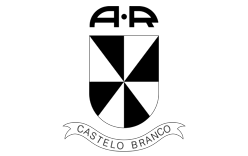
The surviving Alcobia e Ribeiro identity is associated with the initials A.R., derived from the surnames of the two creators.Public historical documentation about the logo itself is extremely limited. No reliable source identified for this article names a professional designer, design agency, official introduction date, typeface or detailed symbolic meaning.The safest interpretation is therefore straightforward: the mark functions primarily as an abbreviation of Alcobia e Ribeiro.Any deeper claims about colors, geometry or symbolism should be treated cautiously unless new primary documentation becomes available.The Car Today
The original A.R. sports car survived and was later restored. Historical reporting from Castelo Branco notes that the vehicle is held in a private collection and has been displayed as part of exhibitions about Portuguese motorsport history. [2]The restored car has also attracted renewed international attention because of its unusual history as a locally built Portuguese sports car that competed successfully in the 1950s. [1]Why Alcobia e Ribeiro Matters
Alcobia e Ribeiro is interesting precisely because it was not a large manufacturer.The A.R. represents a small chapter in Portuguese automotive history, when independent builders and workshops experimented with lightweight sports cars using locally fabricated chassis and components sourced from established manufacturers.Its legacy rests on the combination of craftsmanship, low-volume engineering and motorsport performance rather than mass production.FAQ
What was Alcobia e Ribeiro?
Alcobia e Ribeiro, or A.R., was a small Portuguese automotive project from Castelo Branco associated with a lightweight sports car built in 1955 by António Alcobia and Joaquim Nunes Ribeiro. [1]
What does A.R. stand for?
A.R. stands for Alcobia e Ribeiro, referring to António Alcobia and Joaquim Nunes Ribeiro.
When was the A.R. car built?
The best-known Alcobia e Ribeiro sports car was built in 1955 in Castelo Branco, Portugal. [1]
What engine did the Alcobia e Ribeiro car use?
The car used a modified Peugeot 203 four-cylinder engine, combined with a lightweight tubular chassis and aluminum bodywork. [1]
Was Alcobia e Ribeiro a major car manufacturer?
No. Historical sources indicate that A.R. was a very limited automotive project rather than a mass-production manufacturer. The surviving sports car appears to have been essentially a one-off. [3]
What does the Alcobia e Ribeiro logo mean?
The A.R. identity primarily represents the initials of Alcobia and Ribeiro. No reliable public source located for this article provides a detailed official explanation of additional logo symbolism.
Disclaimer
This article is part of the educational resources provided by Logo Index, an independent archive covering logos, visual identities and graphic design history. Historical names, trademarks and vehicle imagery remain the property of their respective rights holders.